
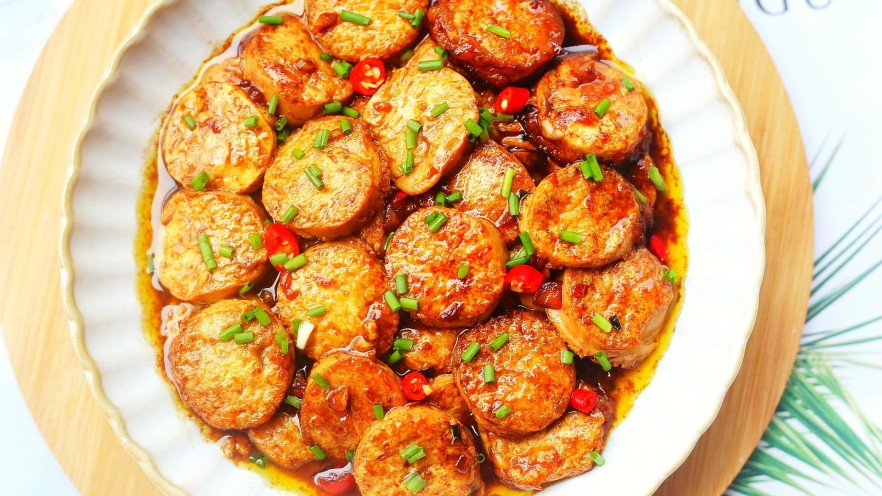


Homemade Beef Balls: Crispy, Juicy, and Way Better Than Store-Bought!
Let’s be real—store-bought beef balls? They’re usually either rock-hard, bland, or loaded with weird preservatives. I’ve wasted so many dollars on sad, rubbery balls that taste like nothing but salt. So last weekend, I decided to take matters into my own hands and make homemade beef balls from scratch. Spoiler: They turned out so good, my roommate ate 10 before I could even finish taking photos. Let’s dive into how I did it—no fancy tools, just patience and a little love (okay, maybe a lot of ice water).

What You’ll Need for the Perfect Homemade Beef Balls
First things first: ingredients. I’ve tried a bunch of recipes, and this combo gives you that chef’s kiss texture—chewy on the outside, juicy on the inside, with that rich beef flavor that makes you go “Mmm.” Here’s what I used:
- 500g (about 1.1 lbs) of beef (I picked sirloin for marbling—trust me, it matters)
- 45g (3 tbsp) of tapioca starch (not cornstarch! Tapioca is the secret to that QQ texture)
- 15g (1 tbsp) of satay sauce (adds a subtle umami kick—skip if you hate it, but why would you?)
- 80g (about 1/3 cup) of fatty pork (yes, FAT—don’t skimp! It keeps the balls juicy)
- 120g (1/2 cup) of ice water (cold = better texture—no exceptions)
- 12g (1 tsp) of salt (measure this carefully—too much = salty mess)
- A pinch of fried garlic (optional, but it adds a crispy crunch that’s *chef’s kiss*)
Pro Tip: Prep Ahead (Because No One Likes a Chaos Kitchen)
Before you start, make sure you have all your ingredients laid out. I’m guilty of running to the fridge mid-recipe, and that’s how you end up with over-mixed meat (trust me, it’s a disaster). Also, freeze a bowl of water or keep a bag of ice handy—you’ll need it later for the ice bath step.
Step-by-Step: How to Make Homemade Beef Balls That Impress
Okay, let’s get cooking! This process takes a little time, but every step is worth it. I’ll walk you through it like I’m chatting with a friend—no fancy chef jargon, promise.
Step 1: Prep the Meat (No More Tough Balls!)
First, grab your beef. You need to trim all the silver skin and tough bits—if you leave that in, your balls will be chewy in the wrong way (like chewing on a rubber band). I spent 10 minutes picking out every little string, and it made a huge difference. Then, cut the beef and pork into small chunks—about 1-inch cubes. Smaller = easier to grind, and that means a smoother texture.

Step 2: Grind the Meat (Slow and Steady Wins the Race)
Start with the fatty pork—grind it first so it mixes evenly with the beef. I used a food processor (if you have a meat grinder, even better, but I’m a college student, so food processor it is). Grind the pork for 30 seconds, then add the beef. Important: Don’t overgrind! I did 30-second bursts, stopping to scrape down the sides. If you grind too long, the meat gets tough. I learned this the hard way—my first batch was like chewing on a hockey puck.

Step 3: Add Salt and Let It Work Its Magic
Next, sprinkle the salt over the ground meat. Salt isn’t just for flavor—it helps break down the proteins and makes the meat sticky (which is good for forming balls). Grind for another 30 seconds, then stop. At this point, the meat should be a little clumpy, but not smooth yet.

Step 4: Add Ice Water (The Secret to Juicy Balls)
Here’s the key step: ice water. You need to add it slowly—like, a little at a time. I reserved 10g (1 tsp) for later, then added the rest in three batches. Each time, grind for 10 seconds, then scrape down the sides. The water should be fully incorporated before you add more. Why ice water? Because it keeps the meat cold, which prevents the fat from melting (melting fat = dry balls). Trust me, this is non-negotiable.

Step 5: Mix the Tapioca Starch (Don’t Lumpy It Up)
Now, take the 10g of reserved ice water and mix it with the tapioca starch. Stir until it’s a smooth slurry—no lumps allowed! If you add dry starch directly, you’ll get weird gummy bits in your balls. Not cute.

Step 6: Add Starch, Satay, and Garlic (Flavor Time!)
Pour the tapioca slurry into the meat mixture. Then add the satay sauce and fried garlic (if you’re using it). Grind for another 30 seconds, stopping to scrape down the sides. At this point, the mixture should be smooth, sticky, and a little glossy. If it’s not smooth enough, grind for 10 more seconds—just don’t overdo it.

Step 7: Let the Meat Rest (Yes, Even Raw Meat)
Transfer the meat mixture to a big bowl. Cover it with plastic wrap and let it rest for 15 minutes. I know, it’s tempting to skip this, but resting lets the flavors meld and the starch absorb the liquid. My roommate tried to skip this once, and his balls fell apart in the pot. Don’t be like my roommate.

Step 8: Test the Texture (Is It Ready to Ball?)
After resting, take a tiny bit of the mixture and roll it into a ball. Drop it into a bowl of cold water. If it sinks, it’s not ready—you need to mix it more. If it floats, you’re good to go! I tested mine three times (paranoid much?) and it floated on the first try. Victory!

Step 9: Make the Balls (No, It’s Not as Hard as It Sounds)
Now, the fun part—shaping the balls! Fill a pot with water and heat it to 80°C (175°F)—you want it just below boiling. Turn off the heat. Then, wet your hands (this is crucial—otherwise, the meat will stick to you like glue). Grab a handful of meat mixture, close your fist, and squeeze gently— a ball should pop out of your thumb and index finger. Use a wet spoon to scoop it into the pot. Repeat until all the mixture is gone.

Step 10: Cook the Balls (Float = Done!)
Once all the balls are in the pot, turn the heat back on to low. Let the water come to a gentle boil. When the balls float to the top, they’re done! I was so excited when I saw mine floating—like, “Yes! I didn’t mess up!” Skim any foam off the top (it’s just impurities, no big deal).

Step 11: Ice Bath (The QQ Secret)
As soon as the balls are done, scoop them out and drop them into an ice bath. This stops the cooking process and makes them super chewy (the good kind of chewy). I used a bowl of ice water, and my balls came out so QQ—my roommate said they were better than the ones at his favorite dim sum place. High praise!

How to Serve Your Homemade Beef Balls (So Many Options!)
Okay, your balls are done—now what? The possibilities are endless! Here are my favorite ways to eat them:
- Hot Pot: Drop them into a spicy Sichuan hot pot—they soak up all the flavor, and the QQ texture is perfect.
- Stir-Fry: Toss them with veggies, oyster sauce, and garlic. Crispy on the outside, juicy on the inside—chef’s kiss.
- Soup: Add them to a clear broth with mushrooms and bok choy. Light, flavorful, and comforting.
- Snack: Just eat them plain! They’re so good on their own—my roommate ate 10 before I could stop him.

My Honest Thoughts: Was It Worth It?
Let’s be real—making homemade beef balls takes time. I spent about 2 hours from start to finish (including prep and cleaning). But was it worth it? Absolutely. The store-bought ones can’t compete with the flavor and texture of these. They’re juicy, chewy, and full of real beef flavor—no weird additives. My roommate even asked me to make a double batch for his family’s weekend dinner. Win-win!

One thing I’ll change next time: I’ll use a meat grinder instead of a food processor. The food processor worked, but the texture was a little finer than I wanted. A grinder would give it a more “authentic” chewy texture. Also, I’ll add a little more satay sauce—my roommate said it was perfect, but I like a little more umami.

If you’re on the fence about making homemade beef balls, just do it. It’s not as hard as it sounds, and the payoff is huge. You’ll never buy store-bought again—trust me. And if you mess up? No big deal! My first batch was a disaster (I overground the meat), but I tried again, and it worked. Practice makes perfect.

Oh, and one last thing: freeze the leftovers! They keep for months. Just thaw them in the fridge, then reheat them in boiling water or a pan. They taste just as good as fresh. I already have a bag in my freezer for lazy nights when I don’t want to cook.

So there you have it—my guide to making the best homemade beef balls ever. Let me know if you try it! Tag me in your photos on Instagram—I’d love to see your creations. And if you have any tips, drop them in the comments below. Happy cooking!


