
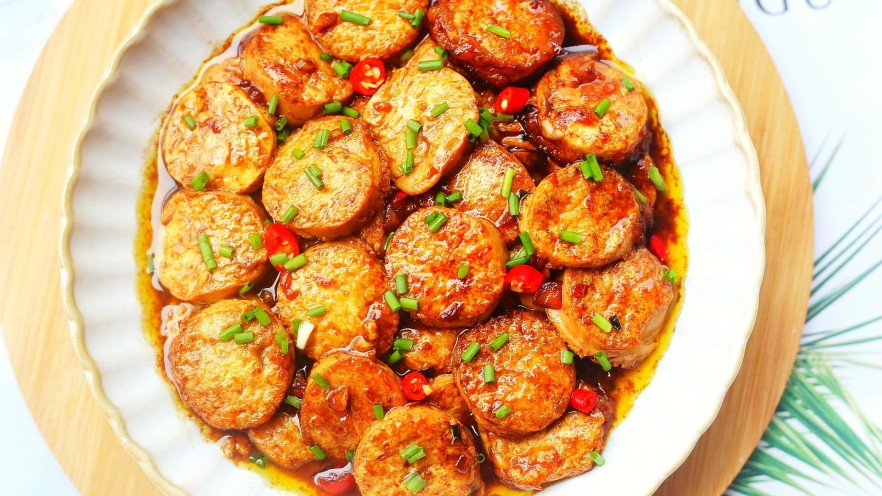


Why This Red Bean Paste Egg Yolk Pastry is a Must-Try
Okay, let’s talk about one of my all-time favorite pastries: the Red Bean Paste Egg Yolk Pastry. Picture this: golden, flaky layers that melt in your mouth, a sweet and creamy red bean filling, and a rich, slightly salty egg yolk center. It’s like a party in every bite! I’ve been obsessed with these since I first tasted them at a little bakery in Chinatown – they’re crispy, tender, and perfectly balanced. But you know what? I bet you can make them at home too, no fancy equipment needed! Today, I’m going to walk you through the process step by step, with all the tips to get those iconic layers right. Let’s dive in!

First, let’s set the scene: imagine biting into a warm, fresh pastry right out of the oven. The crust crunches gently, then gives way to a soft, sweet red bean paste, and finally, a creamy salted egg yolk that adds that perfect savory-sweet contrast. If you’re tired of store-bought pastries that taste dry or too sweet, this recipe is for you. By the end, you’ll have pastries that’ll make you question why you ever paid $5 for one at the bakery. Let’s get started!
What You’ll Need: Ingredients Breakdown
To make these beauties, we need two main parts for the dough: a flaky oil dough and a tender water dough. Then, the star of the show: the filling! Let’s list out everything with easy-to-find ingredients (no fancy stuff needed):
The Dough: Water & Oil Dough
- Water Dough:
- All-purpose flour (or low-gluten flour) – 200g (this is the water dough part)
- Sugar – 30g (adds a subtle sweetness)
- Vegetable shortening (or lard, if you prefer) – 80g (keeps the dough tender)
- Hot water (not boiling!) – 60g (helps the dough come together)
- Egg (for egg wash) – 60g (we’ll use this for brushing before baking)
- Oil Dough:
- Low-gluten flour – 200g (this is the oil dough part)
- Vegetable shortening – 120g (creates those flaky layers when baked)
The Filling
- Salted egg yolks – 30 (you can find these in the fridge section of most Asian grocery stores)
- Red bean paste – 500g (use store-bought or homemade; if homemade, make sure it’s sweet enough!)
- Sesame seeds – a pinch (for that golden top and extra crunch)
Pro tip: If you can’t find salted egg yolks, or if they’re too expensive, you can use a yolk from a hard-boiled egg, but the salted one is what gives that signature flavor. Also, don’t skimp on the red bean paste – the amount is crucial for that rich, sweet filling!
Step-by-Step: Let’s Make Those Pastries!
Alright, let’s get your hands dirty (in a good way!). The key to these pastries is the dough folding and resting, so take your time – patience = flakiness! Let’s start with the doughs.
Step 1: Prepare the Oil Dough (Critical for Flakiness)
First, mix the oil dough. Grab a bowl and add the low-gluten flour (200g) and vegetable shortening (120g). Use your fingertips to work the shortening into the flour until it looks like wet sand – crumbly but not too dry. If you’re using lard, let it sit at room temperature first to soften it. Once combined, cover the dough with plastic wrap and let it rest for 20 minutes. This resting time helps the flour and shortening relax, making it easier to roll later.

Don’t rush this step! If you skip the rest, your oil dough will be tough, and the layers won’t form. I know it’s tempting to jump ahead, but trust me – 20 minutes is worth it for those crispy layers.
Step 2: Prepare the Water Dough
Now, the water dough. In another bowl, combine the all-purpose flour (200g), sugar (30g), and softened vegetable shortening (80g). Mix these with your hands until it’s crumbly. Then, slowly pour in the hot water (60g) – not boiling, just hot from the tap or kettle – and use a chopstick to stir until it forms a shaggy dough. Now, knead it by hand for 5-7 minutes until it’s smooth and elastic. If it’s too sticky, add a tiny bit more flour; if it’s too dry, add a splash more hot water. The goal is a soft, smooth dough that’s not too sticky to handle.

Pro tip: The hot water helps the dough stay tender. If you use cold water, the dough will be harder to knead and might not rise as well. Once the water dough is smooth, cover it with a damp cloth and let it rest for 10 minutes too – same reason as the oil dough!
Step 3: Divide the Doughs
After resting, we need to divide both doughs into small pieces. Using a kitchen scale (this is crucial for even pastries!), weigh the oil dough into 12g pieces (about 30 pieces) and the water dough into 18g pieces (about 15 pieces). If you don’t have a scale, roughly divide the oil dough into 12 equal parts and water dough into 18 equal parts – close enough!

Set aside the divided pieces on a clean surface, covered with a damp cloth so they don’t dry out. Now, we’re ready to wrap the oil dough in the water dough – the magic happens here!
Step 4: Wrap the Oil Dough in Water Dough
Take one water dough piece and flatten it with your palm. Using your thumbs in the center and fingers around the edges, gently press and rotate the dough to form a little bowl shape (like a tiny hat). Place one oil dough ball in the center of the water dough. Now, pinch the edges together, like closing a dumpling, to seal the oil dough inside. Twist the top to make sure the seam is tight – no oil dough should leak out when we roll it!

Turn the wrapped dough so the seam is facing down. This is your “bao” (Chinese bun) shape, but instead of a bun, it’s a dough ball with layers inside. Set it aside, seam-side down, and repeat with all the dough pieces. You’ll have a bunch of little dough balls now – don’t worry, we’ll get to rolling them out!
Step 5: Roll and Rest for Layers
Take one wrapped dough ball and place it on a floured surface. Using a rolling pin, gently roll it into a long rectangle – about 20cm long and 10cm wide. Roll from one end to the other, applying even pressure. If the dough cracks, don’t panic – just pinch it back together. Once rolled, roll it up tightly from one end, like a cinnamon roll. The tighter the roll, the more layers you’ll get later!

Place the rolled dough seam-side down, cover with plastic wrap, and let it rest for 10 minutes. This second rest helps the gluten relax again, making it easier to roll a second time (which creates those beautiful layers). Do this for all the doughs, and you’ll have a stack of rolled dough logs.
Step 6: Prepare the Filling
While the doughs rest, prep the filling. Take each salted egg yolk and red bean paste. Measure out 30g of red bean paste per yolk (since the yolk is about 20-25g, 30g total makes a nice filling). Roll the red bean paste into a ball, then press a salted egg yolk into the center. Wrap the paste around the yolk, pinching the edges to form a smooth ball. Pop these in the fridge for 5 minutes to firm up – this makes wrapping easier later!

Pro tip: If your red bean paste is too dry, add a splash of water and knead it until it’s smooth. Store-bought is fine, but homemade is better if you have time – just simmer red beans with sugar and a bit of oil to make a thick paste!
Step 7: Final Roll and Wrap
Now, take the rested dough logs and unroll them (wait, no – remember the second roll? Let me clarify). Take one rolled dough log and flatten it with your palm, then roll it into a long, thin rectangle again – this time, thinner than before. Roll it up tightly into a log, and let them rest for another 10 minutes. Meanwhile, preheat your oven to 180°C (350°F). Once the oven is ready, take the dough logs, press them flat with your palm, and roll into a circle about 10cm in diameter.

Place one filling ball in the center of the rolled dough circle. Use your right thumb to press the filling down, and with your left hand, start pinching the edges together, rotating the dough as you go. Seal it completely, making sure there are no gaps – the filling should stay inside! Once sealed, place the pastry seam-side down on a baking sheet lined with parchment paper or a silicone mat.
Step 8: Bake and Glaze
Place the pastries in the preheated oven and bake for 25 minutes at 180°C. But here’s a secret: after 7-8 minutes, take them out, brush the top with the leftover egg wash (the 60g egg we saved earlier), and sprinkle on a bit of sesame seeds. This gives them that golden, shiny top and a nutty crunch. Return to the oven for the remaining 17 minutes. Don’t open the oven door early – temperature drops mess with the layers!

Pro tip: If your pastries start to brown too quickly, cover them loosely with foil. But usually, 180°C is perfect for these pastries – not too hot, not too cold.
Step 9: Cool and Enjoy!
After 25 minutes, take the pastries out of the oven and let them cool on a rack for at least 30 minutes. I know, it’s hard to wait, but if you eat them too soon, they’ll be soggy. Trust me, I’ve burned my tongue more than once trying to eat hot pastries! Once cool, break one open – you’ll see those beautiful flaky layers, the creamy egg yolk, and the sweet red bean paste. Mmm, heaven in your mouth!

Common Mistakes to Avoid
Even pros make mistakes! Here are the top three errors to steer clear of:
- Not resting the doughs: Rushing the resting steps is the #1 reason pastries don’t flake. Always cover with a damp cloth or plastic wrap!
- Overworking the dough: Knead just enough to get a smooth surface – overkneading makes it tough, not flaky.
- Underbrushing egg wash: The egg wash not only adds color but helps the sesame seeds stick and creates a shiny crust. Don’t skip this step!
Pro Tips for Even Better Pastries
Want to take your pastries to the next level? Try these hacks:
- Use cold shortening in the oil dough – freeze the shortening for 10 minutes before using for extra flakiness.
- Double the filling if you love red bean paste – it’s the best part!
- For a fancier look, brush with egg wash again before the final bake for a deeper golden color.
- Make them ahead – they taste even better the next day! Store them in an airtight container at room temperature.
Final Thoughts
There you have it! A complete guide to making Red Bean Paste Egg Yolk Pastry from scratch. These pastries are perfect for tea time, gifting, or just satisfying a sweet-salty craving. The key is patience with the dough resting and rolling, but once you taste that first bite, you’ll feel like a pro baker. Let me know in the comments if you tried this recipe – I’d love to see your pastries and hear your tips!
Happy baking, and enjoy your homemade treats! 🍵✨


