
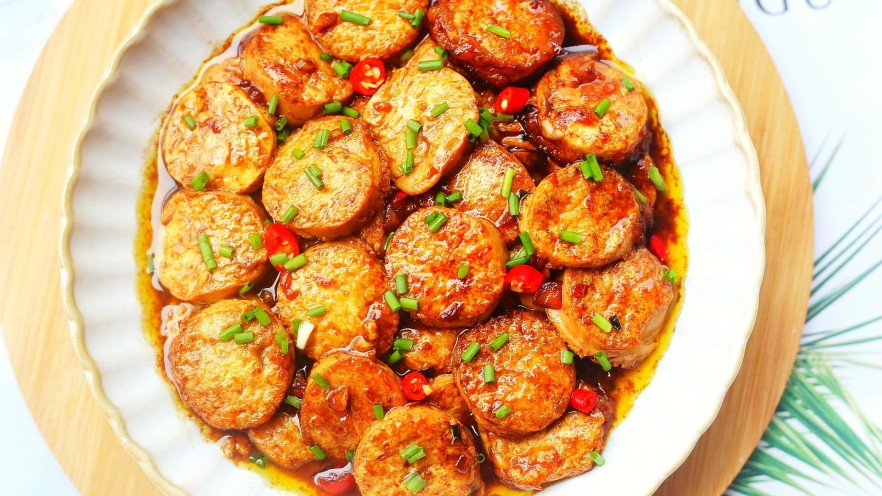


Shao Pi Hui Guo Rou: A Salty-Aromatic Dish You Can’t Get Enough Of
Okay, let’s be real—who doesn’t love a good stir-fry that hits every single flavor note? Salty, savory, a little sweet, and with textures that make your taste buds do a happy dance? That’s exactly what Shao Pi Hui Guo Rou is. I first tried this at a hole-in-the-wall Sichuan restaurant last year, and I swear I’ve been craving it ever since. The combination of crispy pork, chewy sweet potato noodles (that’s the “shao pi” part), and all those aromatic spices? *Chef’s kiss.* Let me break down why this dish is my new obsession—and how you can make it at home too!

What Even Is Shao Pi Hui Guo Rou?
First off, let’s get the basics straight. “Hui Guo Rou” is classic twice-cooked pork—you boil the pork first, then slice it thin and stir-fry it. But adding “shao pi” (sweet potato noodles) takes it to a whole new level. The noodles soak up all the rich, oily flavors from the pork and spices, so each bite is like a little explosion of taste. They’re chewy, slightly crispy if you cook them right, and honestly? Sometimes I end up eating more noodles than pork (no shame).
Unlike plain Hui Guo Rou, this version has extra texture and a subtle sweetness from the sweet potato. It’s not too heavy, but it’s definitely satisfying—perfect for a weeknight dinner or a weekend feast with friends. Trust me, once you make this, you’ll never order takeout Hui Guo Rou again.
Ingredients You’ll Need (No Fancy Stuff, Promise!)
Let’s talk about the star players here. You don’t need a ton of weird ingredients—most of this is stuff you can find at your local Asian market or even a regular grocery store if you’re lucky. Here’s what I use:
- 200g pork belly (the fat is KEY for flavor—don’t skimp!)
- 30g sweet potato starch (that’s what makes the shao pi)
- 40g green onion segments (scallions work too, but green onions add a better bite)
- 35g ginger slices (fresh is non-negotiable—dried ginger just won’t cut it)
- 2 teaspoons white sugar (balances the salt and spice)
- 1 teaspoon salt (go easy—there’s soy sauce in the douban)
- 1 tablespoon cooking wine (rice wine is best, but dry sherry works in a pinch)
- 20g Sichuan peppercorns (hello, numbing spice!)
- 1 teaspoon white pepper (adds a little heat without overpowering)
- 1 tablespoon Pixian Douban (Sichuan broad bean paste—this is the flavor MVP)
Quick tip: For the douban, I swear by the Juan Cheng brand. It’s got the perfect balance of salt, spice, and umami—no weird aftertaste. If you can’t find it, any good Sichuan douban will work, but Juan Cheng is *chef’s kiss*.
Step-by-Step: How to Make Shao Pi Hui Guo Rou (Even If You’re a Beginner)
Okay, let’s get cooking! I’m going to walk you through each step so you don’t mess up (no judgment if you do—cooking is all about mistakes, right?). First, let’s start with the shao pi because that’s the fun part.
1. Prepping the Shao Pi (Sweet Potato Noodles)
First, you need to make the shao pi from scratch—don’t worry, it’s easier than it sounds! Here’s how:
- Grab your 30g of sweet potato starch.


- Add 50ml of water.

- Stir it up until it’s a smooth paste—no lumps allowed!

- Let it sit for a few minutes so the starch settles.

- Heat a pan with a little oil (pro tip: don’t use too much oil here—you want the shao pi to be crispy, not greasy).

- Pour the starch paste into the pan.

- Spread it out into a thin circle—like a tiny pancake!

- Cook until it’s set and slightly golden on the bottom, then flip it. Let it cook for another minute or so.

- Once it’s cool, slice it into strips or squares—whatever shape you like!

Wait, that’s it? Yep! The shao pi is super easy to make, and it adds so much to the dish. I used to buy pre-made shao pi, but making it from scratch tastes way better—trust me.
2. Cooking the Pork Belly (The Twice-Cooked Part)
Now, let’s move on to the pork. Twice-cooked pork is all about boiling it first to get rid of some of the fat, then frying it to get crispy. Here’s how:
- Take your 200g of pork belly.

- Add 20g of Sichuan peppercorns and 20g of ginger slices to a pot of water.

- Boil the pork for 10 minutes. This will make it tender and easier to slice.
- Once it’s cool enough to handle, slice it into thin pieces—thinner is better for crispiness!


Pro tip: If you’re short on time, you can freeze the pork for 15 minutes before slicing—it makes it way easier to get thin slices. I learned this the hard way after struggling to slice a wiggly piece of pork for 10 minutes.
3. Stir-Frying Everything Together (The Fun Part!)
Now, let’s put it all together. This is where the magic happens—all the flavors come together, and your kitchen will smell amazing. Here’s the step-by-step:
- Heat a pan with a little oil.

- Add the sliced pork.

- Cook until the pork is crispy and golden. You want some of the fat to render out—this is what makes the dish flavorful.

- Add 15g of ginger slices and stir-fry for 30 seconds. The ginger will release its aroma—so good!

- Add 1 tablespoon of Pixian Douban. Stir it up so the oil turns red and fragrant.

- Add the sliced shao pi. Stir-fry for 2-3 minutes—you want the shao pi to soak up all the flavors.

- Add 2 teaspoons of sugar, 1 teaspoon of salt, 1 teaspoon of white pepper, and 1 tablespoon of cooking wine. Stir everything together.

- Add the green onion segments. Stir-fry for another minute.

- And that’s it! Your Shao Pi Hui Guo Rou is ready to eat.


Wait, let’s check that again—did I miss anything? Oh right, plating! Here’s what it looks like when it’s done:  And the finished product? *Chef’s kiss.*
My Honest Thoughts (No Filter, Promise!)
Okay, let’s be real—this dish is not for the faint of heart. It’s a little spicy (thanks to the douban and Sichuan peppercorns), a little salty, and a little sweet. But that combination? It’s addictive. The first time I made it, I ate three bowls of rice with it—no shame. The shao pi is chewy and absorbs all the flavors, the pork is crispy and fatty (in the best way), and the green onions add a fresh crunch.
I will say, the first time I made the shao pi, I used too much oil and it turned out greasy. But after a few tries, I got the hang of it—just use a tiny bit of oil, and spread the paste thin. Also, don’t overcook the shao pi—you want it to be slightly chewy, not mushy.
Another thing: If you don’t like spicy food, you can skip the Sichuan peppercorns or use less douban. But where’s the fun in that? The numbing spice from the peppercorns is what makes this dish unique. Trust me, once you try it, you’ll be hooked.
Pro Tips to Make It Even Better
Let me share a few of my favorite tips to make this dish perfect every time:
- Use fresh pork belly—frozen pork belly can be watery and won’t crisp up as well.
- Don’t skip the boiling step for the pork—it removes some of the gamey flavor and makes it easier to slice.
- Taste as you go! Add a little more sugar if it’s too salty, or a little more douban if it’s not spicy enough.
- Serve it with steamed rice—you’ll need something to soak up all that delicious sauce.
Oh, and one more thing: If you’re feeling lazy, you can buy pre-made shao pi from an Asian market. But making it from scratch is so easy, and it tastes way better. Trust me, it’s worth the extra 10 minutes.
Final Thoughts (No, I’m Not Done Raving About This Dish)
So, is Shao Pi Hui Guo Rou worth making? 100% yes. It’s a little time-consuming, but the payoff is huge. My friends and family now beg me to make it for every dinner party, and I’m not even mad about it. It’s the kind of dish that makes you go, “Wow, I can’t believe I made this!”
If you’re a fan of Sichuan food, or just love bold flavors, you have to try this. And if you’re a beginner cook, don’t be scared—this dish is forgiving, and even if you mess up a little, it’ll still taste amazing. Trust me, I’ve messed up the shao pi more times than I can count, and it still turned out delicious.
So what are you waiting for? Grab your ingredients, fire up the stove, and make some Shao Pi Hui Guo Rou. Your taste buds will thank you. And if you make it, tag me on Instagram—I’d love to see your creations!


