

Why Dice Cookies Are the Perfect Baking Pick
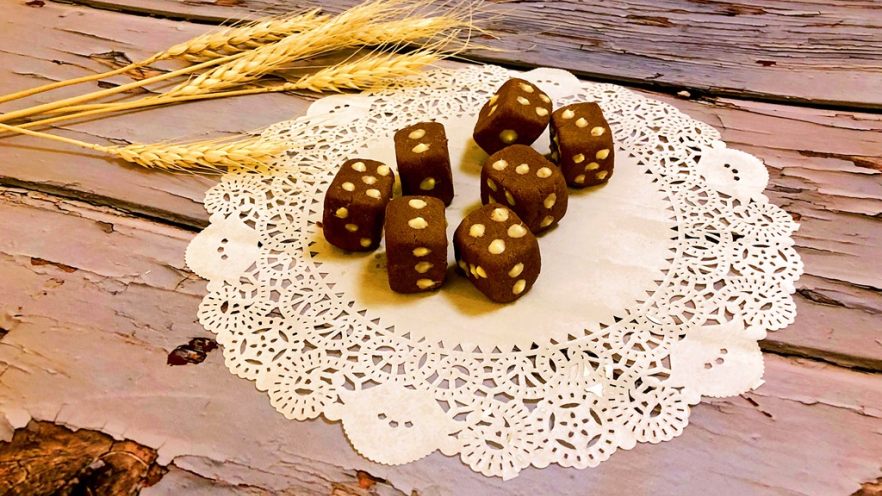
Let’s be real—baking can feel like a chore sometimes, right? You scroll through Instagram, see those fancy layered cakes or intricate macarons, and think, “Nope, not today.” But what if I told you there’s a fun, low-stress treat that’s as cute as it is delicious? Enter dice cookies! These little square bites are crispy, buttery, and have a hint of cocoa that makes them totally addictive. Plus, they look like tiny game dice—hello, party snack win!
I first tried making these on a lazy Sunday when I wanted something easy but not boring. No fancy tools, no complicated techniques—just a few basic ingredients and a little patience. The best part? They’re so versatile. You can swap the cocoa for matcha, or use dark chocolate instead of white for the dots. Trust me, once you make these, they’ll become your go-to “I need a quick sweet fix” recipe.
What You’ll Need (Ingredients List)
Before we dive in, let’s round up the stuff you’ll need. Don’t worry—most of these are pantry staples. Here’s the full list:
- 80g all-purpose flour (wait, no—wait, the recipe says low-gluten flour? Oh right, low-gluten flour gives them that extra crispiness. If you can’t find it, all-purpose works too, but the texture might be a tiny bit different)
- 35g unsalted butter (softened, not melted—super important!)
- 25g powdered sugar (granulated is okay, but powdered makes the dough smoother)
- 6g cocoa powder (use good quality—you’ll taste the difference!)
- 12g egg (that’s about 1/4 of a large egg—just whisk one and measure out 12g)
- 6g vegetable oil (neutral flavor, like canola or sunflower)
- White chocolate (for the dots—milk chocolate works too, but white stands out better)
Pro tip: Measure everything out before you start. It’s called “mise en place” and it saves so much chaos mid-bake. Trust me, I’ve forgotten to weigh the cocoa before and had to stop everything—total buzzkill.
Step-by-Step Guide to Making Dice Cookies
Okay, let’s get baking! Follow these steps, and you’ll have perfect dice cookies in no time.
Step 1: Soften the Butter

First up: 35g of butter. You want it soft enough that you can press your finger into it easily, but not so soft that it’s oozing. If you’re in a hurry, you can microwave it for 5-10 seconds, but watch it—melted butter will ruin the dough. I usually leave mine out on the counter for an hour before baking. Pro move: Cut it into small cubes to speed up softening!
Step 2: Weigh the Powdered Sugar

Next, 25g of powdered sugar. Grab your kitchen scale (seriously, scales are game-changers for baking—no more measuring cup guesswork). Dump it into a bowl and set it aside. Don’t skip this step—too much sugar makes them too sweet, too little and they’re bland.
Step 3: Mix Butter and Sugar

Now, add the powdered sugar to the softened butter. Use a spatula to mix them together a little first—this prevents sugar from flying everywhere when you use the mixer. Trust me, I’ve had sugar clouds in my kitchen before… not fun.
Step 4: Beat Until Fluffy

Time for the electric mixer! Beat the butter and sugar on medium speed for about 1-2 minutes, until it’s light and fluffy. You’ll know it’s ready when the color gets paler and it looks creamy. Don’t overbeat though—we don’t want it to get too runny.
Step 5: Add the Egg

Remember that 12g of egg? Whisk it up first, then pour it into the butter-sugar mix. Go slow—add a little at a time and beat well after each addition. If you pour it all in at once, the mixture might curdle. No panic if it does, though—just keep beating, it’ll come back together.
Step 6: Beat Again

Beat the egg and butter mixture for another 30 seconds or so, until it’s smooth. You don’t want any lumps here—this is what makes the dough silky.
Step 7: Weigh the Low-Gluten Flour

80g of low-gluten flour. Again, use your scale—accuracy is key here. If you only have all-purpose, that’s fine, but low-gluten gives a crispier cookie. Write that down for next time!
Step 8: Sift the Flour

Sift the flour into the butter mixture. Sifting makes the dough lighter and prevents lumps. I know, sifting is a pain, but it’s worth it. If you don’t have a sifter, use a fine-mesh strainer and tap it with a spoon.
Step 9: Weigh the Cocoa Powder

6g of cocoa powder. Same as before—weigh it! Good cocoa powder has a rich, deep color. If yours looks pale, it might be old—time to replace it.
Step 10: Sift the Cocoa Powder

Sift the cocoa powder into the bowl too. Mixing sifted dry ingredients with the wet ones makes everything combine better. No more clumps of cocoa in your cookies!
Step 11: Fold in the Dry Ingredients and Add Oil

Now, use a spatula to fold the dry ingredients into the wet ones. Fold gently—don’t stir too hard, or the flour will develop gluten and make the cookies tough. When it’s almost combined, add the 6g of vegetable oil. The oil adds moisture and makes the cookies extra crispy.
Step 12: Mix Until Smooth

Keep folding until the dough comes together. It should be soft but not sticky. If it’s too sticky, add a tiny bit more flour. If it’s too dry, add a drop more oil. You’ll know it’s right when you can form it into a ball without it sticking to your hands.
Step 13: Shape and Chill the Dough

Put the dough into a cookie mold (or just shape it into a log with your hands) and pop it in the fridge for 1 hour. Chilling is non-negotiable—it makes the dough firm so you can cut it into perfect squares later. If you skip this, the dough will spread in the oven and you’ll end up with blobs, not dice.
Step 14: Take the Dough Out of the Fridge

After an hour, take the dough out. It should be hard enough to cut without squishing. If it’s still too soft, pop it back in for 15 more minutes.
Step 15: Cut into 2cm Strips

Use a sharp knife to cut the dough into strips that are 2cm wide and 2cm tall. Try to make them as even as possible—this way, all your cookies bake at the same rate. If the edges are messy, trim them with the knife.
Step 16: Cut into Dice and Round the Corners

Now, cut those strips into 2cm cubes—voilà, dice shapes! Then, gently pinch the four corners of each cube to round them a little. This makes them look more like real dice and prevents sharp edges from burning.
Step 17: Bake the Cookies

Preheat your oven to 145°C (293°F). Line a baking sheet with parchment paper (no more sticky cookies!). Place the dice cookies on the sheet, leaving a little space between them (they won’t spread much, but better safe than sorry). Bake for 20 minutes. Every oven is different, so check them at 18 minutes—if they’re golden around the edges, they’re done. Don’t overbake, or they’ll get too hard!
Step 18: Melt the White Chocolate

While the cookies cool, melt the white chocolate. The best way is to use a double boiler: fill a pot with a little water, bring it to a simmer, and put a heatproof bowl on top (make sure the bowl doesn’t touch the water). Add the chocolate and stir until it’s smooth. If you don’t have a double boiler, microwave it in 30-second bursts, stirring each time—don’t let it burn!
Step 19: Add the Dice Dots

Once the cookies are completely cool (if you do this while they’re warm, the chocolate will melt off), grab a small stick (like a toothpick or lollipop stick) and dip it into the melted chocolate. Draw dots on each side of the dice: 1 dot on one side, 2 on another, up to 6. Be patient—this part is fun but takes a little time. Let the chocolate set for 10-15 minutes, and you’re done!
Pro Tips for Perfect Dice Cookies Every Time
Want to make sure your dice cookies turn out amazing? Here are my top tips:
- Use a kitchen scale: Baking is science, and measuring by weight is way more accurate than cups.
- Don’t overmix the dough: Overmixing develops gluten, which makes cookies tough. Fold gently!
- Chill the dough: I can’t say this enough—chilling keeps the cookies from spreading and makes cutting easier.
- Watch the oven temperature: Every oven runs hot or cold. Use an oven thermometer to check if yours is accurate.
- Let cookies cool completely before adding chocolate: Warm cookies will melt the chocolate, and your dots will be a mess.
Final Thoughts: Enjoy Your Dice Cookies!
And there you have it—your very own homemade dice cookies! They’re crispy, buttery, and have that perfect cocoa flavor. I love bringing these to game nights (obviously) or packing them in my kid’s lunch box—they’re always a hit. You can even experiment with different flavors: try adding a little vanilla extract, or swap the cocoa for matcha powder for green tea dice cookies. The possibilities are endless!
So next time you’re craving something sweet and fun, give this recipe a try. It’s easy, low-stress, and the results are so satisfying. Let me know in the comments if you make them— I’d love to see your creations!