


My First Shot at Making Orleans Roasted Chicken & Bacon Pizza (Spoiler: It Was a Rollercoaster)

Let me start by being 100% honest: I’ve never made a pizza from scratch before. Like, never. I’ve ordered delivery, heated up frozen ones, and even grabbed a slice from the corner shop—but actually assembling one? That was uncharted territory. So when I decided to tackle an Orleans roasted chicken and bacon pizza, I had zero clue what I was doing. Spoiler alert: It wasn’t perfect, but it was mine. And hey, that’s half the battle, right?
First off, let’s talk about my “oven” situation. I don’t have a fancy pizza oven. I don’t even have a regular oven that heats evenly (thanks, old apartment appliances!). So I did what any desperate beginner would do: I used an electric griddle. Yeah, you read that right. An electric griddle. Now, before you judge, let me say this: It worked… kind of. But if you have an oven? Use it. Save yourself the headache. Trust me.
What You’ll Need (No Fancy Tools Required—Promise)
Let’s get into the ingredients. I tried to keep this simple because, again, beginner here. No weird imported cheeses or specialty flours. Just stuff I could grab from my local grocery store. Here’s the list:
- Chicken breast (or thighs, if you prefer juicier meat)—I used about 200g, but you can adjust based on how meaty you want your pizza
- Orleans roasted chicken seasoning mix—this is the star! I grabbed a packet from the Asian food aisle, but any brand works
- 1 pre-made pizza crust—no shame in using store-bought! Making dough from scratch was way too intimidating for my first try
- Vegetables: Corn (canned or frozen, drained), bell peppers (I used green for color), carrots (shredded—they add a nice crunch)
- Shredded mozzarella cheese—lots of it. You can never have too much cheese, right?
- Bacon (cooked and crumbled) and a few slices of sausage (I used Italian, but any kind is fine)
- Pizza sauce or ketchup—yes, ketchup works in a pinch! I used pizza sauce, but if you’re out, don’t panic
Pro tip: Don’t overcomplicate the veggies. Use whatever you have in the fridge. I almost added mushrooms, but I was scared they’d make the pizza soggy. Next time, maybe!
Step-by-Step (With All My Mistakes Included)
Okay, let’s walk through the process. I’ll be real about where I messed up so you don’t repeat my errors.
Step 1: Prep Your Ingredients (And Maybe Cook Some First)

First things first: Get all your ingredients ready. I made the mistake of not prepping everything before I started, and it turned into a chaotic mess. Here’s what I did:
- Dice the chicken into small pieces—bite-sized is best so it cooks evenly
- Shred the carrots and chop the bell peppers into tiny chunks (you don’t want big veggie pieces that fall off when you bite)
- Cook the bacon until crispy, then crumble it. I used pre-cooked bacon to save time—no judgment!
- Optional: I sautéed the veggies for 2-3 minutes in a pan to soften them. The corn was already tender, but the peppers and carrots needed a little heat. This also helps get rid of excess moisture so your pizza doesn’t get soggy (a common beginner mistake I almost made!)
Step 2: Marinate the Chicken (Do This the Night Before—Seriously)

This is the most important step for that Orleans flavor. I mixed the chicken pieces with the Orleans seasoning and a little water (as per the packet instructions) and let it marinate in the fridge overnight. Let me tell you: That marination time made all the difference. The chicken was so juicy and flavorful—way better than if I’d only marinated it for 30 minutes. If you’re short on time, marinate for at least 2 hours, but overnight is ideal.
Oh, and don’t skip this step! The Orleans seasoning is what makes this pizza unique. Without it, it’s just a regular chicken pizza. You want that sweet, savory, slightly spicy kick—trust me.
Step 3: Assemble the Pizza (On the Electric Griddle—Yikes)

Now for the fun (and stressful) part: putting it all together. Here’s how I did it on my electric griddle:
- Preheat the electric griddle to medium-low heat. You don’t want it too hot, or the crust will burn before the cheese melts.
- Place the pre-made crust on the griddle. Let it cook for 1-2 minutes on one side to get a little crispy—this prevents it from getting soggy when you add the toppings.
- Flip the crust over (the crispy side is now the bottom). Spread a thin layer of pizza sauce (or ketchup) evenly over the top. Don’t go overboard—too much sauce = soggy pizza.
- Add your toppings! I started with a layer of shredded mozzarella (cheese first = glue for the toppings), then the marinated chicken, crumbled bacon, sausage slices, corn, bell peppers, and shredded carrots. Then I added another layer of cheese on top (because, cheese).
- Now, here’s the tricky part: Cover the griddle with a lid. This traps the heat and melts the cheese. But wait—my griddle lid is super shallow. I added too many toppings (oops) and the lid wouldn’t close all the way. So I had to use a regular pot lid to cover it. It worked, but it was a total hack.
- Cook for about 5-7 minutes, or until the cheese is melted and bubbly, and the crust is crispy on the bottom. Keep an eye on it—electric griddles heat differently, so you don’t want to burn the crust.
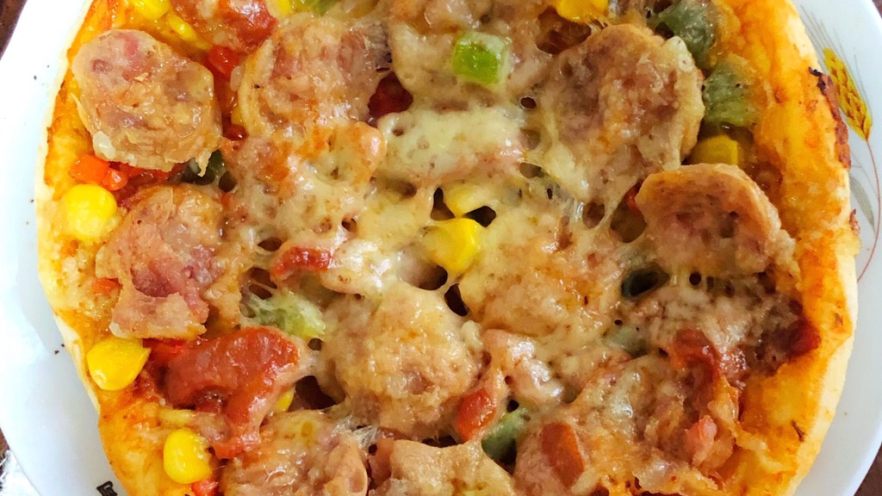
When I lifted the lid, the first thing I noticed was that the crust wasn’t as crispy as I wanted. It was soft, almost doughy. But the cheese was melted, the chicken smelled amazing, and the bacon was crispy. So I called it a win.
My Honest Tips (From a Beginner to Another)
Let’s cut to the chase: My first pizza wasn’t perfect, but I learned a lot. Here are my top tips to save you from making the same mistakes:
- Use an oven if you can. Electric griddles work in a pinch, but they don’t give you that crispy, golden crust you get from an oven. If you have an oven, preheat it to 200°C (400°F) and bake the pizza for 10-12 minutes. You’ll thank me.
- Don’t overstuff the toppings. I added way too much chicken and veggies, and the lid wouldn’t close. Plus, the crust couldn’t support all the weight, so it was a little floppy. Less is more—focus on balance.
- Marinate the chicken overnight. This is non-negotiable. The flavor difference is night and day.
- Skip the microwave. I considered using the microwave before the griddle, but I’m glad I didn’t. Microwaves turn the crust into a dry, cardboard-like mess. Trust me—avoid it at all costs.
- Pre-cook the veggies (optional). If you’re using veggies with high water content (like bell peppers or mushrooms), sauté them first to remove excess moisture. This prevents a soggy pizza.
- Use pre-made crust for beginners. Making dough from scratch is hard. Save that for your second or third pizza. Store-bought crusts are cheap, easy, and taste great.
Final Thoughts (Was It Worth It?)
So, how did it taste? Honestly? It was delicious. The Orleans chicken was juicy and flavorful, the bacon added a salty crunch, and the veggies gave it a fresh kick. The crust was soft, but that’s my fault for using an electric griddle. Would I make it again? Absolutely—but next time, I’m borrowing my friend’s oven.
Making pizza for the first time was scary, but it was also fun. I laughed at my mistakes (like the lid not closing), and I felt proud when I took that first bite. If you’re a beginner who’s scared to try, just do it. It doesn’t have to be perfect. It just has to be yours.
So grab your ingredients, skip the microwave, and give this Orleans roasted chicken and bacon pizza a try. And if you use an oven? Even better. Let me know how it goes—I’d love to hear your pizza stories!