

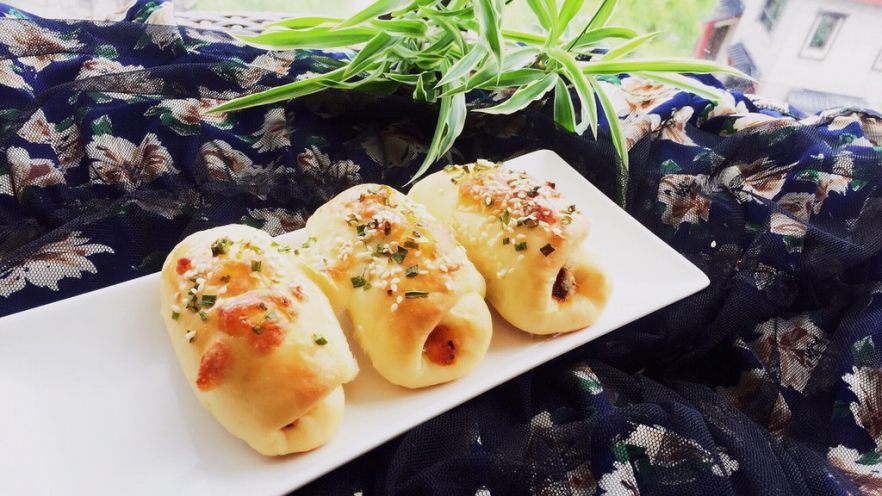

Why These Fluff Caramel Marshmallow Pork Floss Buns Are a Game-Changer
Let me tell you about the most unexpected hit in my kitchen this month: Fluff caramel marshmallow pork floss buns. I’m a total home baker nerd—always tinkering with recipes to make them less sweet (thanks to my son, who’s a self-proclaimed “sweet hater”). He’ll turn his nose up at any cookie with even a hint of extra sugar, so when I decided to swap regular sugar for Fluff liquid caramel marshmallow in a savory bread recipe, I was low-key nervous. Spoiler: He ate three in one go after his badminton practice. Three! That’s how good these are.
These buns are the perfect middle ground between salty and subtly sweet. The pork floss is the star—salty, savory, and packed into every bite—while the Fluff adds a warm, caramel-y undertone that’s so faint you might not even notice it at first… until you take a second bite and think, “Wait, what’s that delicious hint of sweetness?” They’re soft, fluffy, and ideal for breakfast on busy mornings or an afternoon pick-me-up when you’re craving something satisfying but not too heavy.
Ingredients You’ll Need (For 9 Small Buns)
First, let’s talk ingredients. I kept this batch small because I wanted to test the recipe, but trust me—you’ll want to double it (I’ll remind you later!). Here’s what you need:
- 150g high-gluten flour (the secret to chewy, elastic bread)
- 2g instant yeast (make sure it’s fresh—old yeast = sad, unrisen dough)
- 20g egg liquid (save a little extra for brushing the tops later!)
- 80g light cream (adds richness without making the dough too heavy)
- 18g Fluff liquid caramel marshmallow (this is the magic swap—no granulated sugar here!)
- 2g salt (balances the sweetness and enhances the savory pork floss flavor)
- 8g unsalted butter (softened to room temp—don’t skip this for that melt-in-your-mouth texture)
- 50g homemade pork floss (store-bought works too, but homemade is chef’s kiss)
- 40g pizza sauce (or salad dressing if you prefer—both add a tangy kick)
- Optional toppings: shredded cheese, chopped scallions, white sesame seeds (for extra crunch and flavor)
Pro tip: If you’re using store-bought pork floss, pick a savory, not sweet, variety. We don’t want to overdo the sweetness here!
Step-by-Step Instructions to Make the Buns
Let’s dive into the process. Don’t worry—even if you’re a beginner baker, this recipe is straightforward. Just follow these steps, and you’ll have fluffy, pork floss-packed buns in no time.
Step 1: Prep the Dough Base

First things first: Ditch the granulated sugar. Grab that bottle of Fluff liquid caramel marshmallow—this is what makes these buns unique. Measure out 18g of it (I use a kitchen scale for accuracy, but a spoon works too if you’re in a pinch).
Step 2: Mix the Dry & Wet Ingredients (Except Butter & Salt)

Throw all your ingredients into a bread machine (or a large bowl if you’re kneading by hand) except for the butter and salt. That means high-gluten flour, yeast, egg liquid, light cream, and Fluff. Set the bread machine to the “dough” setting and let it knead for 20 minutes. If you’re kneading by hand, mix until everything comes together into a shaggy dough, then knead on a floured surface for 15 minutes—your arms will get a workout, but it’s worth it!
Step 3: Add Butter & Salt (The “Window Pane” Test)

After 20 minutes, add the softened butter and salt. Knead for another 15-20 minutes (10-15 minutes by hand). The goal here is to get a “window pane” effect: Take a small piece of dough, stretch it thin. If it’s translucent enough to see light through without tearing, you’re good to go. If it tears, keep kneading—this gluten development is what makes the buns fluffy!
Step 4: First Fermentation (Rise Time!)

Shape the dough into a smooth ball, place it back in the bowl, and cover with plastic wrap. Let it rise in a warm spot (around 28°C/82°F) until it doubles in size. A pro tip for summer: Do this in an air-conditioned room! If your kitchen is too hot, the dough might rise too fast and get a weird, sour taste. I learned that the hard way once—never again.
Step 5: Check if the Dough Is Ready

How do you know when it’s done? Dip your finger in flour and poke the center of the dough. If the hole doesn’t shrink back or collapse, it’s perfect. If it shrinks, it needs more time. If it collapses… oops, you over-fermented it. Don’t panic—just try again next time!
Step 6: Divide & Shape the Dough

Punch down the dough to release all the air (this is super satisfying, trust me). Turn it out onto a lightly floured surface and divide it into 9 equal pieces. I use a kitchen scale to make sure each one is the same size—about 30g each. This way, all the buns bake evenly.
Step 7: Rest the Dough (Don’t Skip This!)

Roll each piece into a smooth ball, place them on a baking sheet, and cover with plastic wrap. Let them rest for 15-20 minutes. This relaxes the gluten, so when you roll them out later, they won’t spring back. If you skip this step, you’ll be fighting with the dough—and no one has time for that!
Step 8: Fill the Buns with Pork Floss & Sauce

Take one rested dough ball and flatten it into a long, oval shape (like a tongue—hence the “cow tongue” shape some bakers call it). Spread a thin layer of pizza sauce (or salad dressing) on top, then sprinkle a generous amount of pork floss. Don’t be shy—more pork floss = more flavor!
Step 9: Roll ’Em Up Tight

Roll the dough up from the bottom to the top, making sure to seal the edges tightly. You don’t want the pork floss or sauce to leak out while baking—that’s a messy disaster waiting to happen. Place each rolled bun on a baking sheet lined with parchment paper, seam side down.
Step 10: Second Fermentation (Make ’Em Puffy)

Cover the buns with plastic wrap again and let them rise for the second time. The ideal temperature is around 38°C/100°F with some humidity. If you have an oven with a proofing setting, use that! If not, preheat your oven to the lowest temperature (like 50°C/122°F), turn it off, and place a bowl of hot water inside. The steam will keep the dough moist. Let the buns rise until they’re 1.5 times their original size—this takes about 30-45 minutes.
Step 11: Brush with Egg & Add Toppings

Preheat your oven to 180°C/356°F. Brush the tops of the buns with the leftover egg liquid (this gives them a shiny, golden crust). Then add your toppings: shredded cheese (I use mozzarella for extra gooeyness), chopped scallions, and white sesame seeds. Go wild—these toppings add so much texture!
Step 12: Bake to Perfection (Watch the Color!)

Put the baking sheet in the preheated oven and bake for 15 minutes. Here’s a mistake I made: I forgot to cover the buns with aluminum foil halfway through, so they got a little too dark. If you notice the tops browning too fast, cover them with foil—you want a golden crust, not a burnt one! Every oven is different, so check them after 12 minutes to be safe.
Step 13: Let Them Cool (But Try Not to Eat Them Immediately)

Take the buns out of the oven and let them cool on a wire rack for 10 minutes. I know it’s tempting to bite into a hot bun, but trust me—letting them cool slightly helps the flavors settle, and you won’t burn your tongue. Once they’re cool enough to handle, store them in an airtight container at room temperature. They’ll stay fresh for 2-3 days, but let’s be real—they’ll be gone before then.
My Son’s Reaction (The Ultimate Test)
Remember my sweet-hating son? He came home from badminton practice, sweating and hungry, saw the buns on the counter, and asked, “Are these sweet?” I told him to try one—and he didn’t stop at one. He ate three. Three! He said, “They’re not sweet at all—just salty and fluffy. Can you make these every week?” That’s the highest praise I’ve ever gotten from him. Mission accomplished.
Pro Tips for Success
Before you start baking, here are a few tips to make sure your buns turn out perfect every time:
- Double the recipe! My batch makes 9 small buns, which is great for a family of two, but if you have more people (or just love these buns), multiply all ingredients by 2. You won’t regret it.
- Air conditioning is your friend in summer. Kneading and first fermentation in a hot kitchen can ruin the dough. Turn on the AC to keep the temperature around 28°C/82°F.
- Oven temperatures vary. My oven bakes at 180°C/356°F for 15 minutes, but yours might need 12 or 18 minutes. Keep an eye on them—burnt buns are sad buns.
- Homemade vs. store-bought pork floss: Homemade is cheaper and you can control the saltiness, but store-bought works too. Just pick a savory brand.
- Don’t overfill the buns. It’s tempting to add a ton of pork floss, but if you do, the dough might not seal properly and the filling will leak out while baking. A little goes a long way (but okay, maybe a little extra is fine).
Final Thoughts
These Fluff caramel marshmallow pork floss buns are now a staple in my kitchen. They’re easy to make, versatile (great for breakfast, snacks, or even a light lunch), and they’re loved by both kids and adults. The combination of salty pork floss and subtle caramel sweetness is so unique—you won’t find anything like this at a bakery.
So grab your ingredients, preheat your oven, and give this recipe a try. And don’t forget to tell me how it goes! Did your family love it as much as mine did? I bet they will.