


Why These Wheat Germ Dinner Rolls Are the Best Breakfast Ever
Let me start by saying: I’m a total breakfast person. Like, I’ll even skip lunch if the breakfast is good enough. But let me tell you—this wheat germ dinner roll recipe changed my morning game. I mean, how many times have you stared at the clock at 7 AM, thinking, “Ugh, what do I eat today?!” Well, no more stress. These rolls are not just easy to make; they’re the softest things you’ll ever put in your mouth. And the wheat germ? Total nutritional win for your breakfast. Let’s dive in!
First off, wheat germ—have you ever looked at the label on your cereal and seen “wheat germ” and thought, “Is that even a thing?” It’s actually like the gold dust of the wheat world. Packed with vitamin E, fiber, protein, and even B vitamins, this stuff is basically a multivitamin in a tiny, golden flake. So swapping regular bread for these wheat germ rolls means you’re starting your day with a nutrient boost instead of just sugar or empty calories. Genius, right?
And the best part? These rolls disappear faster than you can say “I need another one.” My partner and I made a batch, and by 9 AM, they were gone. I had to hide the last two in the fridge to save some for later… but let’s be real, they’re not staying hidden for long. Trust me, once you try the soft, slightly sweet, wheat-germ-y goodness, you’ll get it.
Ingredients You’ll Actually Need (No Mystery Items Here)
Okay, let’s get to the goods. Grab these ingredients (all measured in standard cups/grams—feel free to adjust if you’re using US vs. metric, but I’ve got the grams here for precision):
- 200g bread flour (you know, the stuff that makes bread stretchy)
- 50g cake flour (this is what keeps the rolls tender—don’t skip it!)
- 25g wheat germ (the star of the show! Make sure it’s fresh)
- 35g salted butter (split into two parts: one big, one small chunk)
- 30g powdered sugar (adds a subtle sweetness, not too much)
- 3g salt (just a pinch to bring out the flavors)
- 1 egg (room temperature, please—helps with texture)
- 120ml pure milk (whole milk works best for creaminess, but skim is okay too)
- 3g active dry yeast (the magic that makes the dough rise)
Oh, and don’t forget extra corn oil for greasing the pan—this isn’t listed in the ingredients, but you’ll thank me later to prevent sticking!
Step-by-Step: Let’s Make These Rolls (With Lots of Pro Tips)
Okay, roll up your sleeves (or just tie back your hair, no judgment here). This recipe uses a bread machine, but if you don’t have one, you can do it by hand—just adjust the kneading time. Let’s go!

Step 1: Prep Your Ingredients and Tools
First, gather all your ingredients and set them out. Then, grab a small bowl and a big bowl (or your bread machine pan). Also, grab a measuring cup for milk, a knife for cutting butter, and a clean kitchen towel for wiping up messes (you’ll need it). Pro tip: Grease your pan with corn oil now—don’t wait until later! Otherwise, your rolls might stick like glue.

Step 2: Let’s Knead the Dough (Bread Machine or Hand)
Now, add the wet ingredients first: milk, egg, salt, powdered sugar. Then dry ingredients: cake flour, bread flour, wheat germ, and yeast. If using a bread machine, just put them in the order listed and set the “knead” function for 15 minutes. If doing by hand, use a stand mixer or knead by hand for 10-15 minutes until the dough is smooth. Either way, knead for 15 minutes total. You’ll want the dough to be soft and slightly sticky but not too messy.

Step 3: Add the Butter to Make It Shiny
After the first 15 minutes, add the big chunk of butter (about 25g). Let the kneading continue for 20 minutes total. If using a bread machine, just add the butter and set it to knead again. If by hand, add the butter and keep kneading. You’ll feel the dough change—softer, smoother, and less sticky. This is where the magic happens!

Step 4: Add the Remaining Butter for That Flaky Goodness
When the kneading is about 10 minutes in (after adding the first butter), add the small chunk of butter (about 10g). Keep kneading for the full 20 minutes. Now, if you’re using a bread machine, this might be part of the same cycle, but check your machine’s instructions. The goal is to get that perfect “windowpane” texture—more on that later!

Step 5: Check for the Perfect Dough (Windowpane Test!)
After kneading, take a tiny piece of dough and stretch it gently. If it can form a thin, almost see-through “windowpane” without tearing, you’re good! If not, knead for another 5 minutes. This is the key to soft, fluffy rolls—no one likes tough bread, right? So don’t rush this step; the windowpane test is your friend.

Step 6: First Fermentation (Room Temperature Magic)
Once your dough is kneaded to perfection, shape it into a smooth ball (like, no cracks, no lumps). Cover it with a clean kitchen towel or plastic wrap and let it ferment at room temperature for about 1 hour. Room temp is around 20-25°C (68-77°F)—if it’s colder, you might need 1.5 hours. If it’s hot, 45 minutes is enough. The dough should double in size—so it’ll look puffy and springy when you press it gently.

Step 7: Prep the Baking Pan (Cold Is Good for Crispy Sides)
While the dough ferments, prep your baking pan. Grease the bottom and sides with corn oil (remember the extra we mentioned earlier!). Then, put the pan in the fridge to chill. Why? Because cold pans help the rolls develop a crispy crust on the bottom while staying soft on top. It’s a pro trick—you’ll thank me later!

Step 8: How to Tell if Fermentation Is Done
After 1 hour, check the dough. Dip your index finger in a little bread flour (to prevent sticking), then poke the center of the dough. If the hole stays open (doesn’t collapse or spring back), your dough is ready! If it bounces back immediately, let it ferment a bit longer. If it sinks, it’s over-fermented—don’t panic, just knead it a little to release the gas.

Step 9: Punch It Down and Divide
Once fermented, punch the dough gently to release the air. Then, divide it into 4 equal parts (or 3 if you want bigger rolls). Roll each part into a smooth ball, cover with plastic wrap, and let them rest for 15 minutes. This is called “relaxing” the dough—so the gluten relaxes, making shaping easier later.

Step 10: Shape Those Rolls (Long, Lean, and Rolled)
After resting, take each dough ball and roll it into a long, thin rectangle (about 10 cm long). Then roll it up tightly, like a cinnamon roll, making sure the seam is sealed. Let all the shaped rolls rest for 5 minutes before moving to the next step. You’ll have 4 or 6 rolls depending on how you divided them—either way, they’ll be cute and ready to rise!

Step 11: Second Fermentation (Oven with Hot Water)
Take the pan out of the fridge (it should be cool but not cold). Place each shaped roll into the pan, spaced evenly. Then, preheat your oven to 38°C (100°F) (no, you don’t need to turn it on yet—just use the oven’s warm function if you have one, or a proofing tray). Put the pan on a baking sheet and place a small tray of hot water underneath to create humidity. Let the rolls rise for 40 minutes. They should puff up and feel light when you touch them.

Step 12: Slice and Bake (Golden Brown Time!)
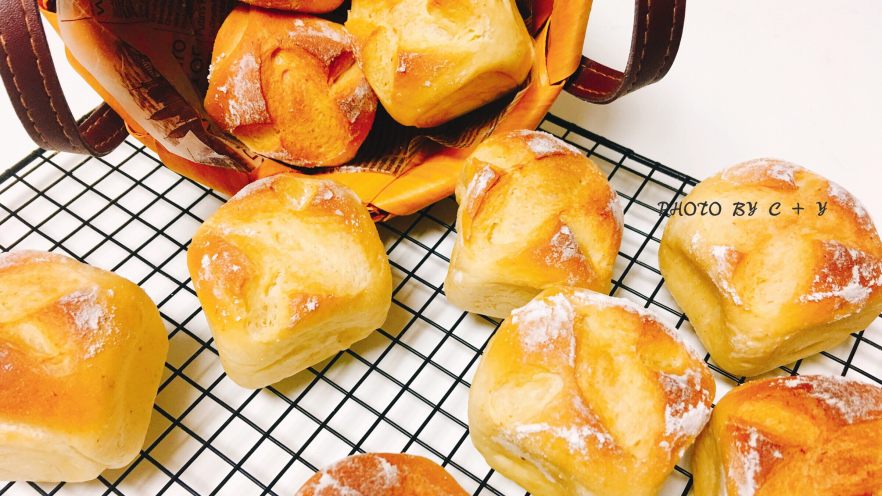
When the rolls are puffed (not too big, not too small), preheat your oven to 200°C (400°F). Sprinkle a tiny bit of flour on top, then slice a small “V” shape on the top of each roll (this helps them expand evenly). Now, bake for 20 minutes. Keep the water tray under the pan while baking—this keeps the rolls moist and prevents the tops from drying out. After 20 minutes, check if they’re golden brown on top. If not, bake for another 5 minutes.

Step 13: Cool and Enjoy!
Take the pan out of the oven and let the rolls cool for 5 minutes. Then, carefully flip them out onto a cooling rack (they’ll be hot, so use oven mitts!). Let them cool completely before slicing or eating—this helps the structure set, so they don’t fall apart when you tear them.

Step 14: Tear and Eat (The Best Part!)
Once cool, tear a roll gently—it should pull apart like a cloud! The inside should be soft, fluffy, and full of wheat germ goodness. You can also slice it for sandwiches or just eat it as is. I recommend slathering with a tiny bit of butter (optional) and maybe a drizzle of honey for extra sweetness.

Pro Tips to Avoid Common Mistakes
Let me share my top tips to make sure your rolls turn out perfect every time (because we’ve all had dough fail before… sigh):
- Room temp is key: If your kitchen is cold, let the dough ferment in a warm spot (like near a sunny window or on top of the fridge). If it’s too hot, use the air conditioner to keep it around 25°C.
- Humidity is your friend: When proofing (fermenting) the rolls, always use a tray of hot water to keep the air moist. Dry air makes rolls crack on top.
- Butter matters: Use salted butter for flavor, but if you only have unsalted, add an extra pinch of salt. Don’t skip butter—this is what makes the rolls soft!
- Windowpane test: If you can’t form a windowpane, knead a little more. Under-kneaded dough = tough rolls, over-kneaded = no good either. Balance is key!
Another thing: if you want even softer rolls, try using a stand mixer with a dough hook—it does all the work for you. And if you’re short on time, use instant yeast instead of active dry yeast (just skip the “proofing” step, since instant yeast dissolves faster). But trust me, with this method, even a beginner can make these!
Final Thoughts: Why You Need This Recipe in Your Life
So there you have it! These wheat germ dinner rolls are the ultimate healthy breakfast solution. They’re packed with nutrients, super soft, and taste amazing. Plus, they’re easy to make—even if you’re not a pro baker. I’ve made them for friends, and they’ve all begged for the recipe. It’s the perfect balance of healthy and delicious, and your mornings will thank you.
Let me know how they turn out! Tag me in your photos on Instagram or Facebook—I’d love to see your take on these rolls. And if you have any questions, just leave a comment below—I’m here to help!