
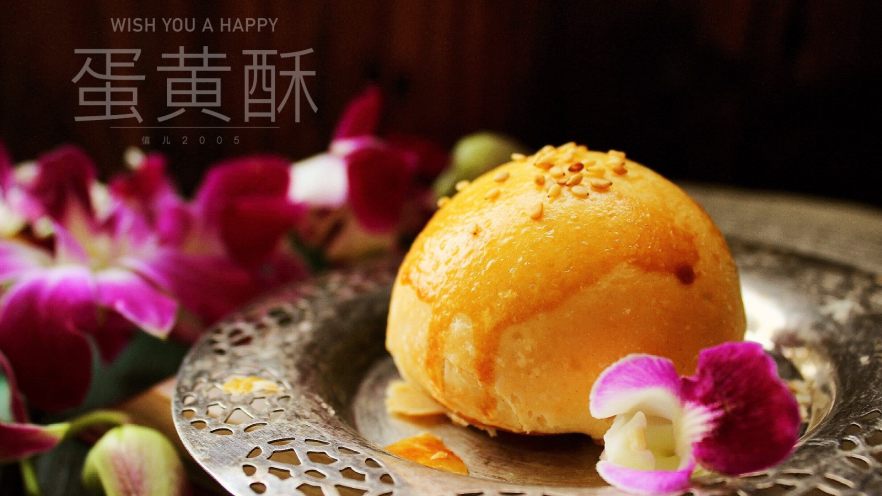

Why Egg Yolk Pastry (Dan Huang Su) Is My New Obsession
Let’s talk about egg yolk pastry—those flaky, buttery, sweet-savory treats that make you go “mmmmm” with every bite. I used to think they were only for fancy bakeries, but guess what? I made them at home, and they turned out amazing! The secret? A convection oven (wind oven, as some call it). I tried my CASO steam convection oven this time, and wow—180°C for 25 minutes, and every pastry had even browning and layers so distinct you could peel them apart. Total game-changer. Let me walk you through how I did it (and yes, I’ll spill the silly mistake I made too).
Ingredients You’ll Need
First, let’s gather everything. No fancy gadgets required (well, a bread machine helps, but you can hand-knead too). Here’s the breakdown:
Water Oil Dough (Shui You Pi)
- 120g all-purpose flour
- 120g cake flour (low-gluten)
- 95g water
- 25g granulated sugar
- 70g lard (trust me, lard makes it flakier—vegetable shortening works too, but lard is chef’s kiss)
Oil Shortcrust Dough (You Su Pi)
- 180g cake flour (low-gluten)
- 90g lard (again, lard is key here)
Filling & Extras
- 375g red bean paste (store-bought is fine—no need to make it from scratch unless you’re feeling ambitious)
- 15 salted duck egg yolks (yes, 15—we’re making 15 pastries… or 14, in my case)
- 1 egg yolk (for brushing the tops)
- 1 tbsp rum (for soaking the egg yolks—optional but adds a nice depth)
- 1 tbsp sesame seeds (white or black, for topping)
Step-by-Step Guide to Making Egg Yolk Pastry
Let’s get to the fun part! I’ll break this down so it’s easy to follow—even if you’re a beginner (like I was).
Prep the Salted Duck Egg Yolks
First, the star of the show: the salted egg yolks. These can be fishy if not prepped right, so don’t skip this step!

Put your salted egg yolks in a small bowl, pour rum over them (just enough to cover), and let them sit overnight in the fridge. The next day, pop them on a baking sheet and bake at 180°C (350°F) for 5 minutes. Let them cool completely—this makes them firm and less likely to ooz out later.
Make the Water Oil Dough

Throw all the water oil dough ingredients into a bread machine (or a big bowl if you’re hand-kneading). If using a machine, set it to the dough cycle. If hand-kneading, mix until it forms a smooth ball, then knead for 10-15 minutes until you can stretch it into a thin “windowpane” (that means the gluten is developed enough).

Once it’s smooth, wrap it in plastic wrap and let it rest for 30 minutes. Resting is non-negotiable—it relaxes the gluten so the dough is easier to roll later.
Make the Oil Shortcrust Dough
For the oil shortcrust, mix the low-gluten flour and lard in a bowl until it forms a smooth, non-sticky dough. No need to knead too much—just combine until it’s uniform.

Wrap this dough in plastic wrap too and let it rest for 30 minutes, same as the water oil dough.
Divide the Doughs

After resting, divide both doughs into 15 equal small balls. The water oil dough balls should be about 20g each, and the oil shortcrust ones about 18g each. (Pro tip: Use a kitchen scale for accuracy—this ensures every pastry is the same size.)
Wrap the Oil Shortcrust in Water Oil Dough

Take one water oil dough ball, flatten it into a small circle with your palm or a rolling pin. Place an oil shortcrust ball in the center.

Pinch the edges of the water oil dough up around the oil shortcrust, making sure it’s completely sealed. Flip it over so the seam is down—this keeps everything neat.

Do this for all 15 pairs, then let them rest for 10 minutes (yes, another rest—patience pays off!).
First Roll & Roll

Take one sealed dough ball, flatten it with your palm, then roll it into a long oval (about 15cm long). Be gentle—you don’t want to squish the layers.

Starting from the top, roll the oval up into a tight cylinder. Place it seam-side down on a tray.

Do this for all 15, then cover them with plastic wrap and let them rest for 20 minutes. This step builds the flaky layers—don’t skip it!
Second Roll & Roll

Take one rested cylinder, flatten it slightly, then roll it again into a longer oval (about 20cm this time). The layers should start to show now—exciting!

Roll it up again into a tight cylinder, seam-side down.

Cover all with plastic wrap and rest for another 20 minutes. I know, more waiting—but trust me, this is why the layers are so flaky.
Make the Filling Balls

While the dough rests, prep the filling. Take the red bean paste and divide it into 15 balls (25g each). Flatten a bean paste ball, place a cooled salted egg yolk in the center, then wrap the paste around it until the yolk is completely covered. Roll it into a smooth ball.

Do this for all 15 yolks—set them aside.
Assemble the Pastries

Take one rested dough cylinder. Use your middle finger to press down the center of the cylinder, then fold the two ends towards the center (like closing a book). Flatten it into a small disc.

Roll the disc into a circle (about 12cm wide) with a rolling pin—make sure the edges are thinner than the center (this helps seal the pastry).

Place a red bean-yolk ball in the center of the circle. Gently pull the edges of the dough up around the filling, pinching the top to seal it tightly. Flip it over so the seam is down—this gives the pastry a smooth top.
Repeat for all—wait, why do I have 14? Oh right, I was chatting with my little girl while making them, and one fell on the floor. Oops! (Mental note: No multitasking while baking.)

Place the pastries on a baking sheet (I used my CASO golden baking pan—so shiny!). Leave some space between them—they’ll expand a little.
Bake the Pastries

Preheat your oven to 180°C (350°F). While preheating, brush the tops of the pastries with a thin layer of egg yolk (mix a little water if it’s too thick). Sprinkle some sesame seeds on top—this adds crunch and looks pretty.

Pop the tray into the oven. I used my CASO CO-960A—preheat time was 8 minutes, and since it’s a convection oven, I could put the tray on any rack (the heat is even everywhere). Bake for 25 minutes.

Keep an eye on them—after 15 minutes, they’ll start turning golden. Don’t open the oven too early, or they’ll deflate!

Once they’re a deep golden brown, take them out. Let them cool for 10 minutes before eating—they’re hot, and the filling is molten!

And there you have it—perfect egg yolk pastries! The layers are flaky, the filling is sweet and salty, and every bite is a little piece of heaven. I ate two right away—no shame.
Pro Tips for Success
Want to make sure your pastries turn out as good as mine? Here are my top tips:
- Use lard: It’s better than vegetable shortening for flakiness. If you’re vegan, try coconut oil, but the texture will be a little different.
- Rest the dough: Every resting step is crucial. It relaxes the gluten and prevents the layers from shrinking.
- Convection oven is best: A regular oven works, but convection gives even browning. If using a regular oven, rotate the tray halfway through.
- Don’t overfill: If you put too much filling, the pastry will burst open while baking. Stick to 25g bean paste per yolk.
- Soak the yolks: Rum (or Shaoxing wine) cuts the fishiness of salted egg yolks. If you don’t have rum, skip it, but the flavor won’t be as good.
Final Thoughts
Making egg yolk pastry at home is easier than I thought! It takes a little time (all that resting!), but the result is worth it. Whether you’re making them for a party or just a weekend treat, your friends and family will be impressed. And hey, even if you drop one on the floor (like I did), it’s still a win—you’ll have more for yourself!


![French Savory Tart [Magic Cake] – Sugar-Free, Layered Delight (Forced My Friend’s Recipe to Obsession!)](https://hearthsiderecipes.com/images/5214/5mit2exneu1.jpg "French Savory Tart [Magic Cake] – Sugar-Free, Layered Delight (Forced My Friend’s Recipe to Obsession!)")


